Aran: The Land of Stone
“One could say that the Aran Islands are not so much made of land as of stone.”
Tim Robinson
The Aran Islands rise from the Atlantic not as green pasture but as pale limestone, cracked and weathered by time. Exposed in pavements, ridges, and cliffs, it shapes not only the physical landscape but the lives and thinking of those who inhabit it.
Geologically, the islands belong to the same limestone system as the Burren, formed over 350 million years ago. Though separated by water, Inis Mór, Inis Meáin, and Inis Oírr are united by this shared bedrock — a continuous surface of bare limestone that gives the islands their distinctive character and visual unity.
A Surface of Cracks and Openings
“The limestone is articulated by voids and seams that harbour life.”
Tim Robinson
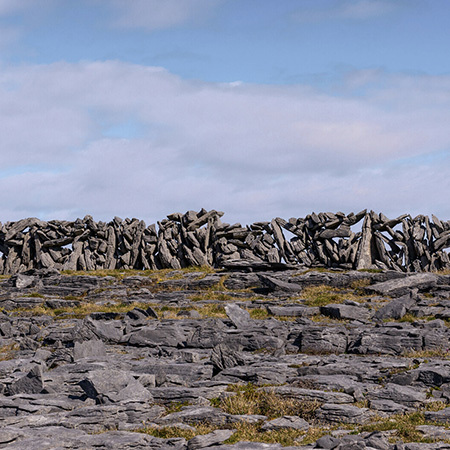
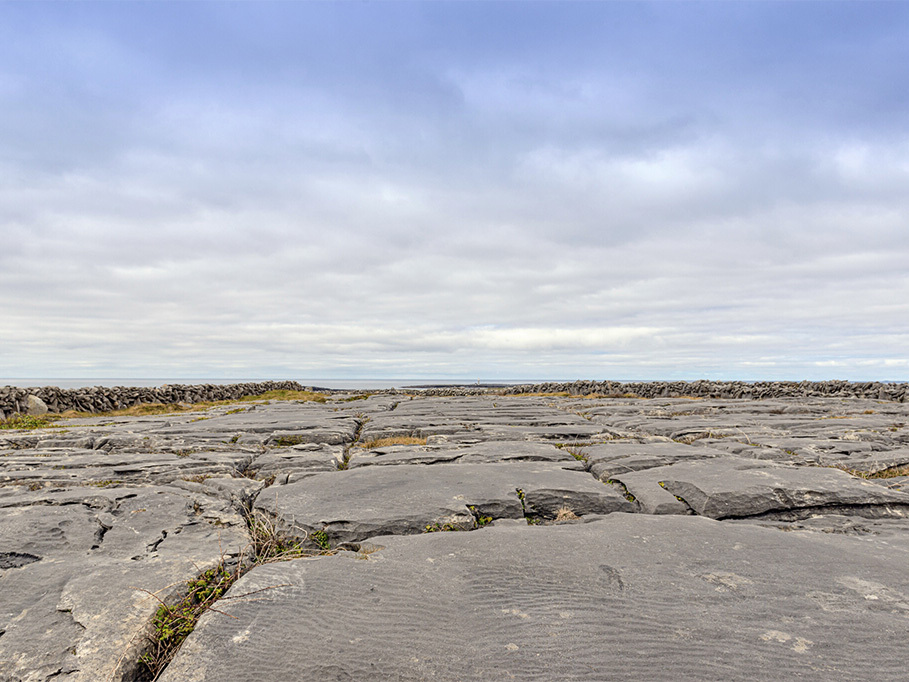
Much of the limestone surface on Aran is karst — bare rock largely devoid of soil. Limestone contains calcium carbonate, which can be slowly dissolved by rainwater that has absorbed carbon dioxide, forming a weak carbonic acid. Over time, this rainwater attacks exposed rock along joints, cracks, and lines of weakness.
These processes gradually enlarge the stone into deep, narrow fissures known as grykes, leaving raised blocks called clints. Within these sheltered cracks, soil and moisture accumulate. Wildflowers and ferns take hold, protected from wind and salt spray, creating pockets of life embedded within the rock.
Life here does not spread openly; it persists quietly. Islanders learned to read the stone closely, recognising possibility where others saw barrenness.
Making Ground from Rock
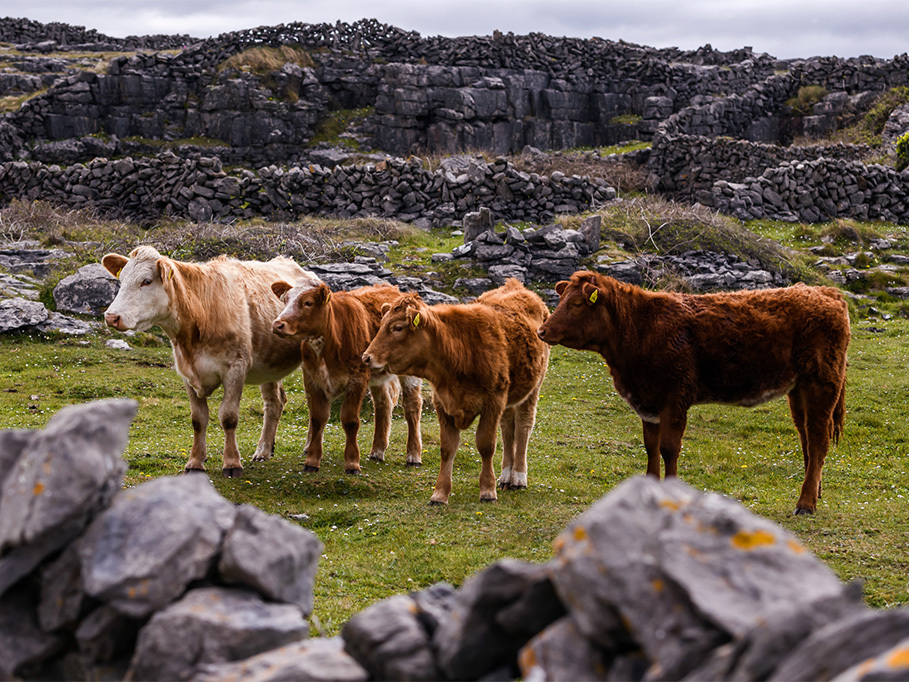
“The land here was not given. It was constructed.”
Island saying
Very little soil exists naturally on the islands. What farmland there is was made by hand — stone cleared away, sand carried from the shore and seaweed spread to enrich thin earth. Each small field represents generations of patient labour and accumulated knowledge.
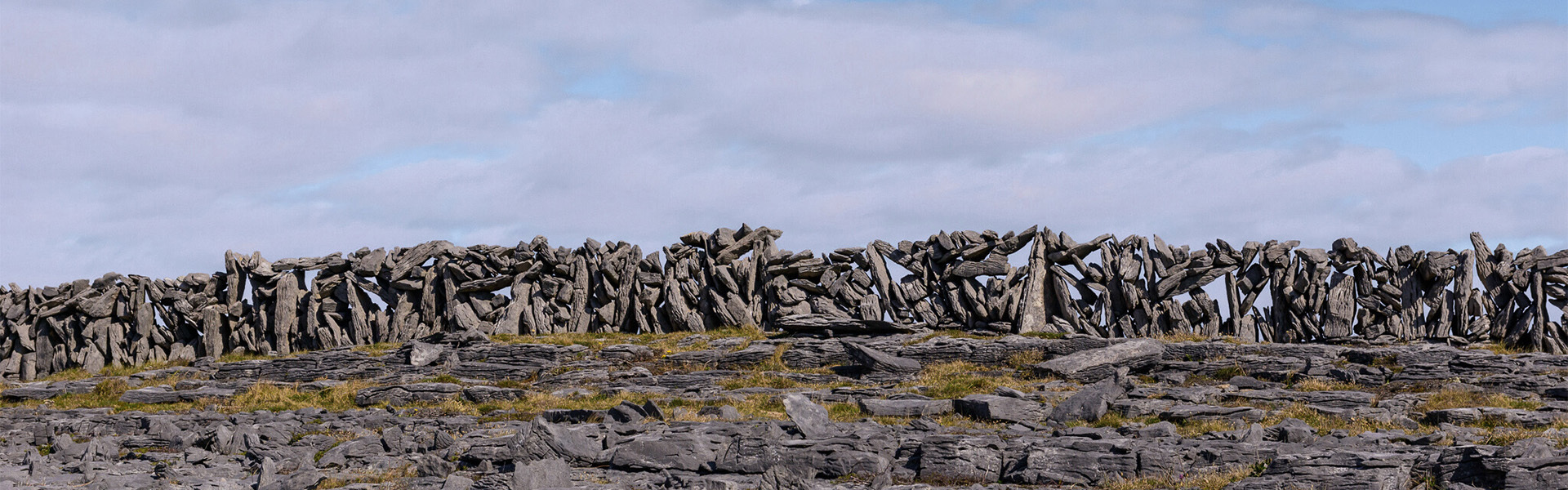
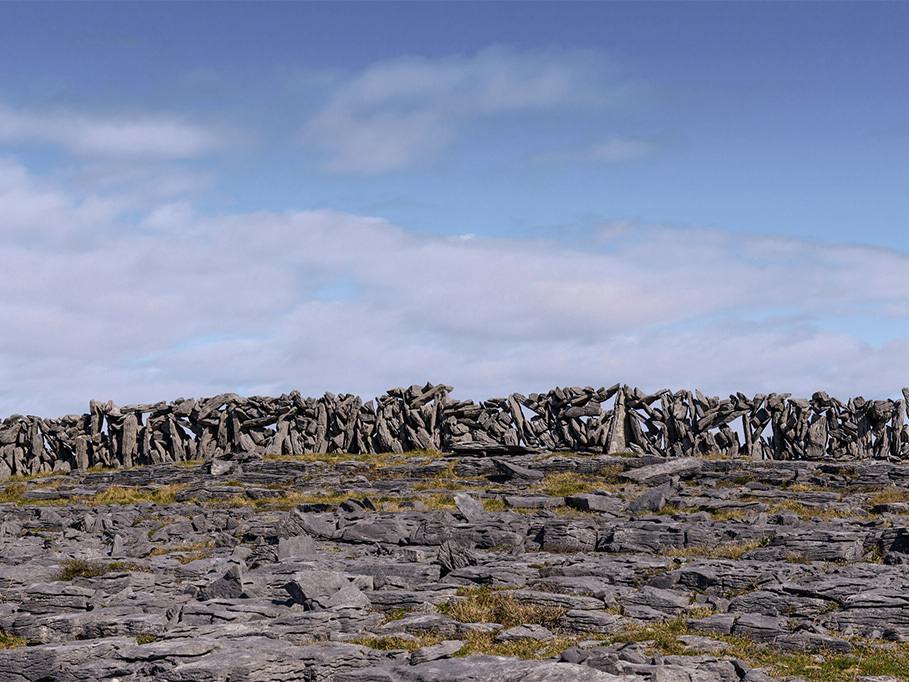
Dry-stone walls divide the land into dense enclosures, sheltering livestock, trapping warmth, and preventing erosion. More than boundaries, they are records of endurance — stone memory laid carefully across the landscape.
Stone as Shelter
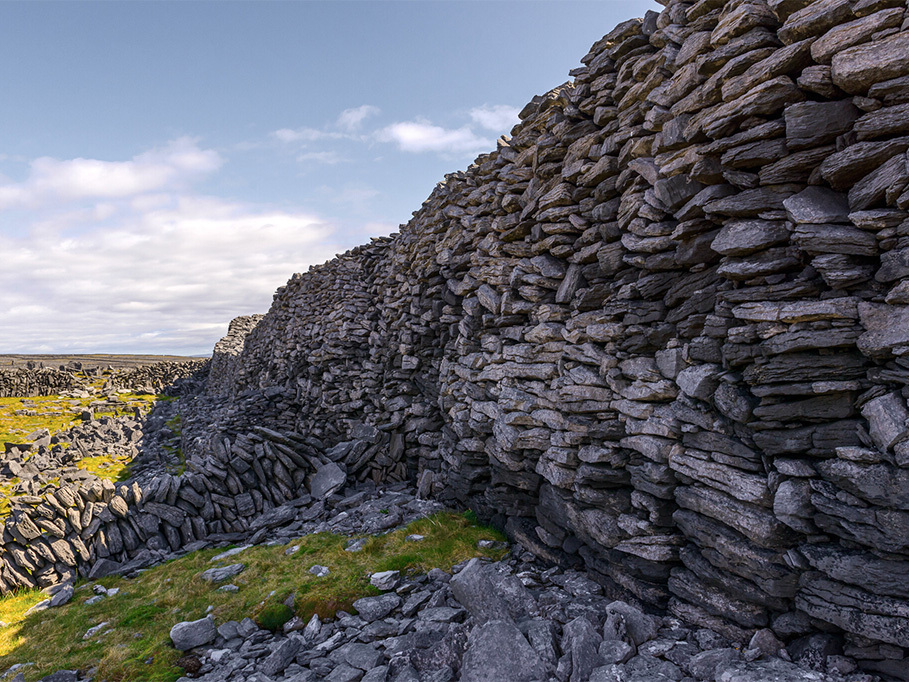
“The houses seem to grow out of the rock itself.”
J. M. Synge
Across the Aran Islands, stone is both material and mindset. The same limestone that fractures the land was shaped into domestic dwellings and formidable cliffside forts such as Dún Dúchathair and more famously Dún Aonghus. Built without mortar, these structures were formed through necessity and knowledge, their strength drawn from placement, weight and balance.
Traditional houses were constructed from this local limestone, creating buildings that felt inseparable from the land itself. Thick walls, small windows, and low profiles reflect a need for shelter and endurance rather than display.
Stone shaped domestic life as well as architecture. Spaces were compact, shared and centred around the hearth, encouraging closeness of family and community.
Atlantic Breakers
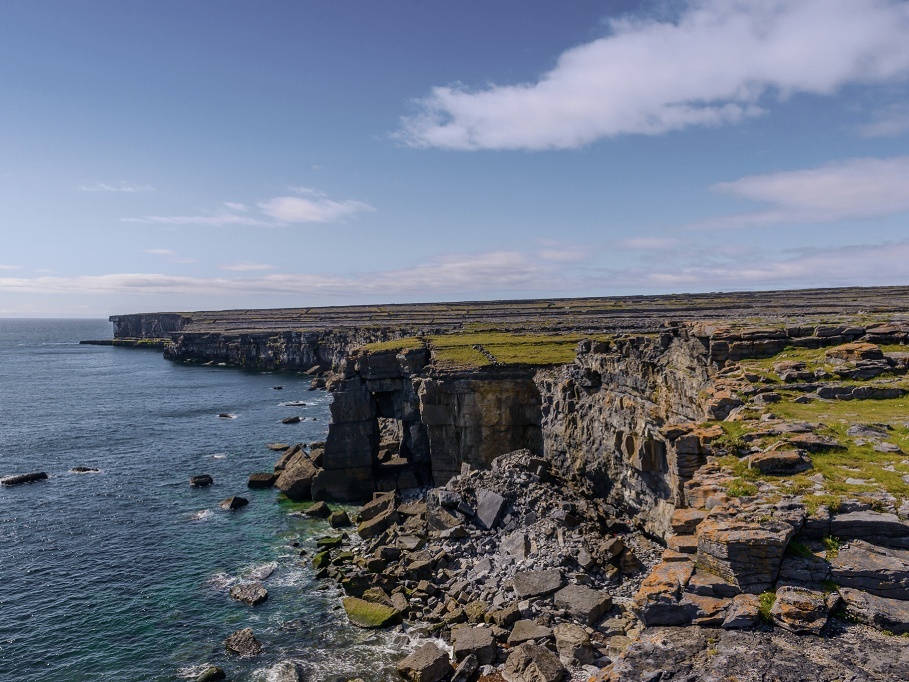
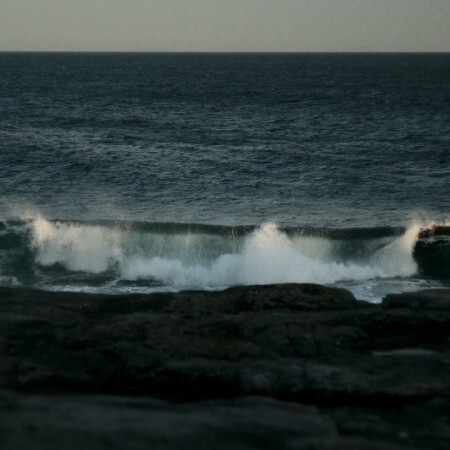
The Atlantic has played a decisive role in shaping the limestone edge of the islands. Along the western coast of Inis Mór in particular, constant wave action has carved dramatic cliffs, collapsing weaker rock and exposing sheer vertical faces above the sea. Storm waves exploit existing cracks and weaknesses in the limestone, gradually undercutting and reshaping the shoreline.
These cliffs are among the most striking features of Aran, revealing the raw meeting point of stone and sea. They stand as evidence of ongoing erosion — a reminder that the landscape, though ancient, is still being shaped.
The Ground Beneath Everything
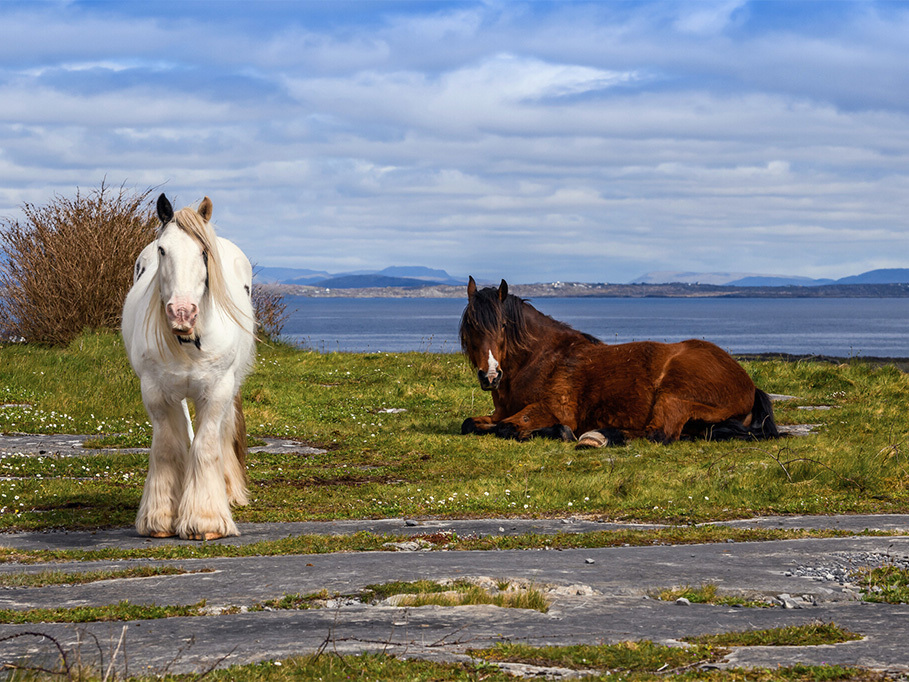
The limestone of Aran underlies every aspect of island life — farming, building, craft, language and memory. In limiting what is possible, it demanded adaptation, giving rise to the distinctive character and reputation by which the islands are known today.
To know Aran is to know its stone: ancient, fractured, resilient. It is the ground beneath every story told on the islands — a place where culture did not conquer nature but learned how to live within it.
Explore More